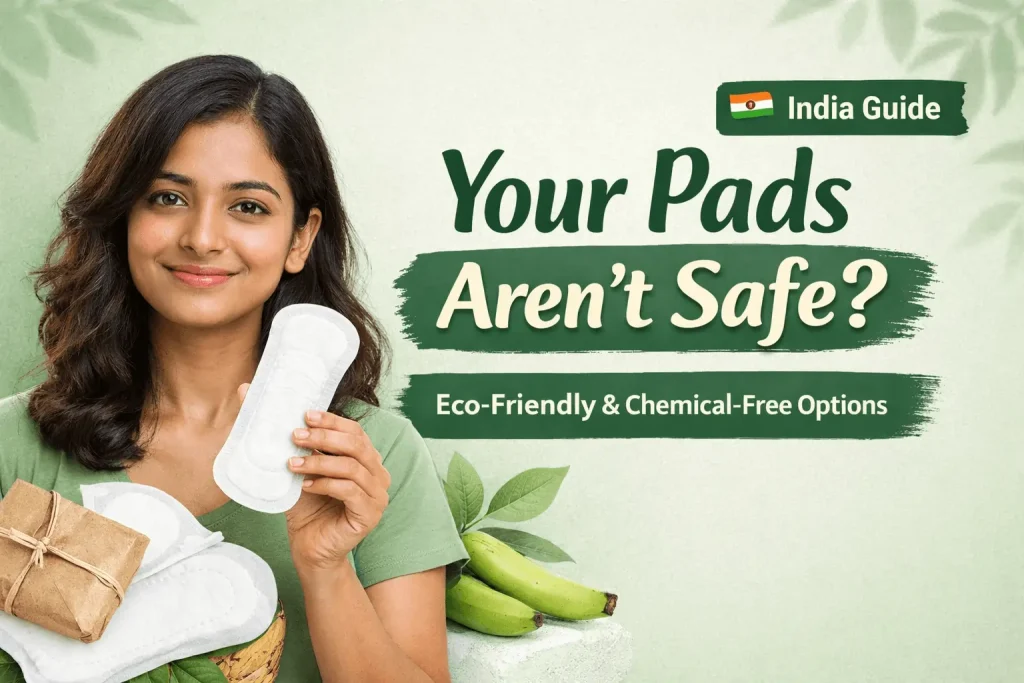
Introduction: Why This Matters More Than You Think
Most people think sanitary pads are harmless everyday essentials… but actually, a single woman can use 10,000+ pads in her lifetime—and most of them contain plastic and chemicals.
That means:
- They don’t decompose easily (can take 500–800 years)
- They sit in landfills or clog drains
- And yes, some may not be the best for your body either
The good news?
Eco friendly sanitary pads and alternatives are now easily available in India—and they’re not as complicated as they sound.
If sustainability feels confusing, start here. This guide breaks it down simply—no jargon, no pressure.
Are Sanitary Pads Eco-Friendly?
Short answer: Most regular pads are NOT eco-friendly.
Why?
- Made with plastic layers (up to 90%)
- Contain synthetic fragrances, gels, and bleached materials
- Not biodegradable
What eco-friendly pads do differently:
- Use organic cotton or plant-based fibers (like banana fiber)
- Are biodegradable or compostable
- Avoid harmful chemicals
👉 So when we say eco-friendly sanitary pads, we’re talking about pads that are:
- Safer for your body
- Safer for the planet
- And often more breathable and comfortable
What Pads Are Environmentally Friendly?
Here are the main types available in India:
1. Biodegradable Pads
- Made from banana fiber / bamboo / corn starch
- Break down naturally
- Closest alternative to regular pads
2. Organic Cotton Pads
- Made from chemical-free cotton
- No synthetic fragrances or bleach
- Good for sensitive skin
3. Reusable Cloth Pads
- Washable and reusable for years
- Zero waste option
- Very breathable
👉 If you’re just starting out, biodegradable pads are the easiest switch.
Which Pads Are 100% Biodegradable in India?
Some Indian brands offer near 100% biodegradable sanitary pads:
- Saathi (banana fiber-based)
- Carmesi Natural range
- Nua biodegradable variants
- Heyday organic pads
- Pee Safe biodegradable pads
💡 Reality check:
Very few are perfectly 100% biodegradable, but many are 90–100% plant-based, which is still a massive improvement over plastic pads.
Which eco friendly Sanitary Pads Are Chemical-Free?
Look for these labels:
- Chlorine-free
- Fragrance-free
- Organic cotton
- No synthetic gel
Common chemical-free options in India:
- Nua (custom + toxin-free focus)
- Carmesi Natural
- Azah
- Heyday
- Plush Organic
👉 These are often called “chemical free sanitary pads in India”, and they’re especially helpful if you face:
- Rashes
- Itching
- Irritation
Top 10 eco friendly Sanitary Pads in India (Beginner-Friendly List)
Here are reliable options you can explore:
- Saathi (banana fiber pads)
- Carmesi Natural Pads
- Nua Organic Cotton Pads
- Azah Pads
- Plush Organic Pads
- Pee Safe Biodegradable Pads
- Heyday Organic Pads
- Sanfe Organic Pads
- EcoFemme (cloth + organic options)
- Anandi Pads
👉 If you’re unsure where to start:
Pick 1 brand → try 1 cycle → decide.
You don’t need to switch everything at once.
Beyond Pads: 5 Eco-Friendly Feminine Hygiene Options
This is where things get interesting. Pads are just one option.
1. Menstrual Cups
- Lasts 5–10 years
- Can be worn for up to 12 hours
- Huge long-term savings
👉 Barrier: Insertion feels intimidating initially
👉 Reality: Most users don’t go back after trying
2. Reusable Cloth Pads
- Soft, breathable, chemical-free
- Last for years
👉 Barrier: Washing & stains
👉 Reality: Becomes routine after a few cycles
3. Period Underwear
- Built-in absorbent layers
- No pad required
👉 Barrier: Fear of leaks
👉 Reality: Works well for light to medium flow
4. Menstrual Discs
- Flexible alternative to cups
- More freedom of movement
👉 Still niche in India, but growing
5. Biodegradable Pads
- Best “no learning curve” option
- Feels like regular pads, but eco-friendly
👉 This is where most people start—and that’s perfectly okay.
How Women in India Actually Choose
Let’s be honest—sustainability alone doesn’t drive decisions.
Top decision factors:
- Hygiene (most important)
- Comfort
- Leakage protection
- Price
- Ease of use
Common hesitations:
- “What if it leaks?”
- “Washing cloth pads feels awkward”
- “Cup use seems difficult”
- “Eco products are expensive”
And all of these are valid.
👉 But here’s the shift happening:
Most women are open to eco-friendly options if they feel clean, safe, and easy to use.
So… What Should You Start With?
If you’re confused, keep it simple:
Beginner Path:
- Step 1: Switch to biodegradable pads
- Step 2: Try organic cotton pads
- Step 3: Explore cups or cloth pads (optional)
👉 You don’t need to be perfect.
Even one switch to eco friendly sanitary pads, reduces waste massively.
This is exactly how most people start—slow, practical, and real-life friendly.
Final Thoughts: Eco-Friendly Doesn’t Mean Complicated
Eco-friendly feminine hygiene isn’t about doing everything perfectly.
It’s about:
- Choosing better when possible
- Understanding your options
- Finding what works for your body
Thoda thoda karke hi habits banti hain.
She bleeds like the earth in quiet seasons—
creating life, again and again, without asking for applause.So we learn to give back, in small, gentle ways—
less waste, softer choices, a little more care each day.
Because protecting her is not a grand act,
it’s love, repeated quietly, in what we choose. 🌿
If you’re switching to eco-friendly sanitary pads, it often leads to bigger, simple lifestyle changes. You can start at home with this Eco-friendly ideas for a More Sustainable Home, or upgrade daily essentials through 7 Eco-friendly Personal Care Products to Save Nature. You don’t need to do everything—just one small switch at a time makes a real difference.