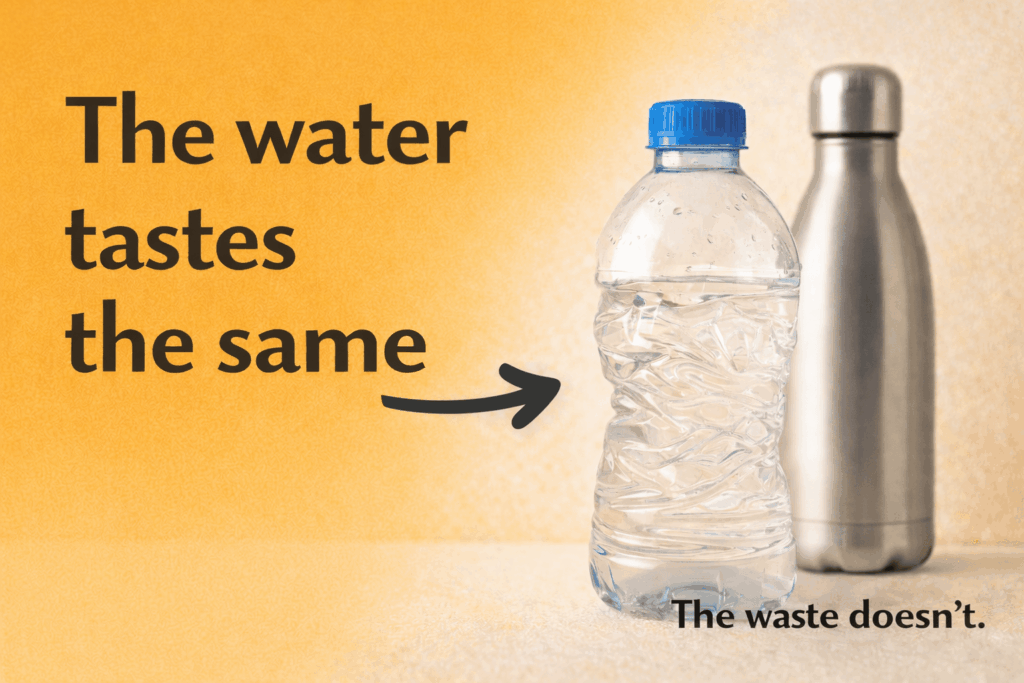
The Water Tastes the Same. The Waste Doesn’t.
Buying bottled water is one of those habits we don’t really question.
Quick errand? Bottle.
Train journey? Bottle.
Forgot your bottle? Another bottle.
Staying hydrated is good.
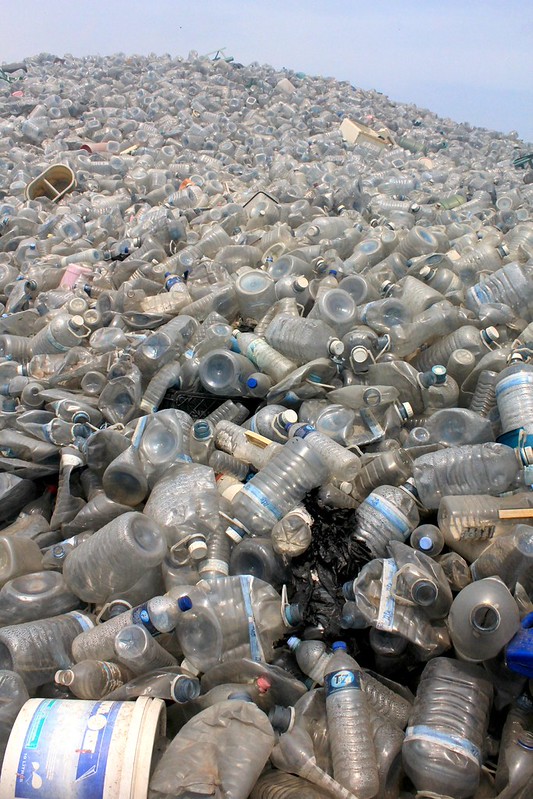
The pile-up of single-use plastic bottles that comes with it… less so.
If you’re trying to start an eco-friendly lifestyle without changing everything at once, this is one of the most practical places to begin.
The easy eco-friendly switch
Switching from buying plastic water bottles to using a reusable water bottle is one of the simplest eco-friendly habits you can adopt.
And here’s why it works in real life:
- You still drink water the same way
- You don’t need reminders
- Your routine doesn’t change
The only difference is what you stop buying — disposable plastic bottles that were never meant to last, but somehow do.
Why this small change matters more than it seems
Globally, hundreds of billions of plastic water bottles are produced every year, and only a small fraction are recycled. Most end up in landfills or oceans, where plastic can take centuries to break down.
That’s not because people are careless — it’s because the system is built on convenience.
Single-use bottles also shed microplastics, which have been found entering food chains and water systems. Again, this isn’t about panic. It’s about understanding that a “one-time use” item often has long-term consequences.
The environmental cost comes not from one bottle — but from billions of them.
Why reusable bottles quietly outperform disposables
A reusable water bottle doesn’t need to be perfect to be better.
Studies show that a durable bottle offsets its environmental footprint after 10–20 uses. After that, every refill is a net positive. Over its lifetime, one reusable bottle can replace hundreds — even thousands — of disposable ones, cutting plastic waste dramatically.
Because reusables reduce the need for repeated manufacturing and transport, they also:
- Lower overall carbon emissions
- Reduce energy use
- Create far less packaging waste
That’s why reusable bottles aren’t a trend — they’re becoming the default.
The health and cost bonus (the part people like most)
This is where the switch becomes a no-brainer for many people.
Reusable bottles:
- Avoid microplastics and chemical leaching from cheap plastics
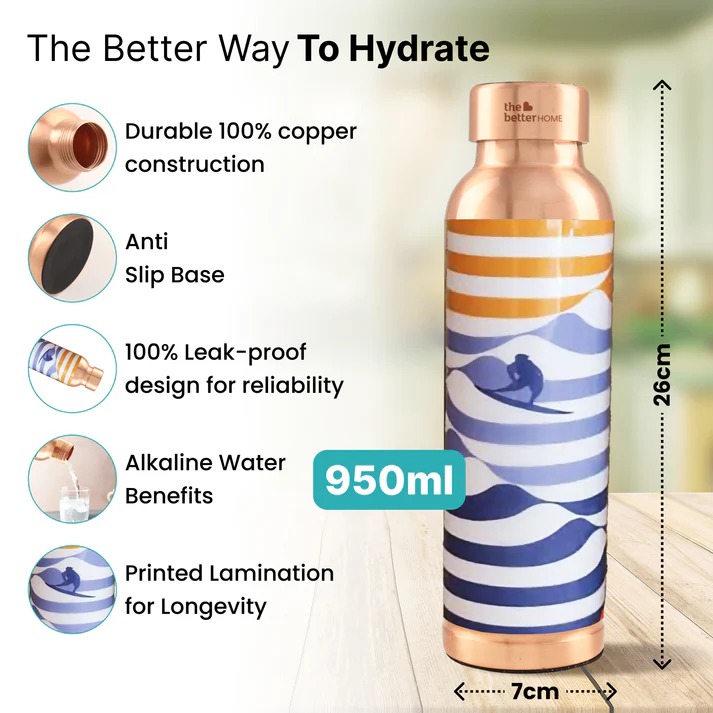
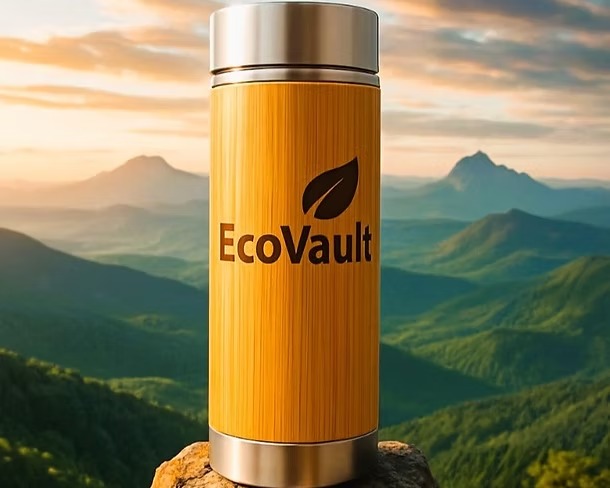
- Offer safer materials like copper, bamboo, steel, glass, or food-grade alternatives
- Often keep drinks cold for hours (sometimes all day)
And financially?
Buying bottled water regularly can quietly add up to hundreds of dollars a year. A reusable bottle pays for itself faster than most people expect.
Same hydration.
Less waste.
Lower long-term cost.
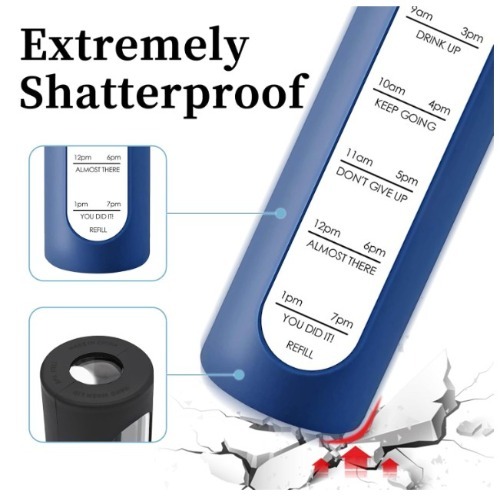
Small habit, real-world impact
Sustainable living doesn’t usually work through dramatic decisions.
It works through boring, repeatable habits that don’t require motivation.
Using a reusable water bottle is one of those habits. Once it becomes part of your day, the impact happens quietly in the background — without effort, guilt, or constant choices.
That’s how real change sticks.
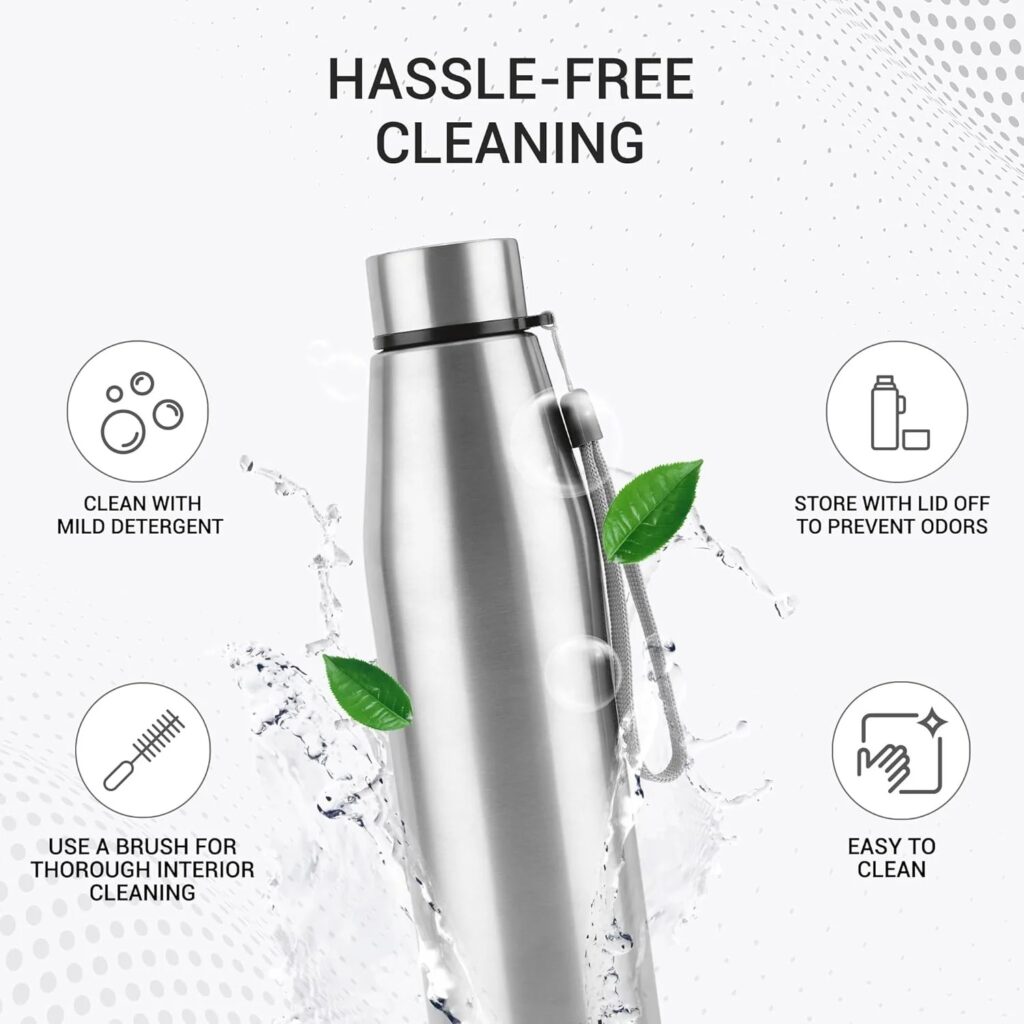
If this sounds like the kind of practical, low-effort habit you’d actually maintain, we’ve linked a few well-made reusable water bottles below that are designed for everyday use — nothing fancy, just durable and reliable.A reusable water bottle doesn’t change how you drink water.Our recommenations are known for their solid construction .It just changes what you stop throwing away — and over time, that adds up in a big way.
The Greeneffective takeaway
You don’t need to overhaul your lifestyle to live more sustainably.
You just need to replace repeat waste with repeat use.
Come along on this planet friendly journey.You will love it.